Better Data.
Without More Work.
Your IBD patients arrive with up to 60 days of continuous monitoring data and validated clinical scores. You review a one-page PDF. That's it.
"Wearable devices can detect and predict IBD flares through changes in heart rate variability and resting heart rate, often weeks before symptoms appear."
The 15-Minute Reality
Patient recall is unreliable. Paper diaries are incomplete. Portal questionnaires have 20% compliance. You're making treatment decisions with partial data.
What You Actually Receive
A single PDF. Patients generate it in 30 seconds. You review it in under 2 minutes.
At a Glance
- Wellness Score (0-7)Combined wearable + symptom assessment
- Disease StatusRemission / Mild / Moderate / Severe
- HBI or SCCAI TrendThe same indices you use, tracked continuously
- Flare Activity & Pre-Flare SignalsDuration, peak severity, and physiologic warning signs
Objective Data
- HRV Baseline vs. Current% change with trend direction
- Resting Heart RateElevated RHR often precedes flares
- Sleep Duration & EfficiencySleep disruption correlates with inflammation
- Activity LevelSteps, exercise minutes, sedentary time
Clinical Context
- Medication AdherenceActual % by medication, with biologic dosing intervals
- Bloodwork TrendsCRP, ESR, albumin, CBC, liver & kidney panels
- Surgical & Medication HistoryPrior resections, scopes, and discontinued therapies
- Auto-Generated QuestionsData-driven prompts for discussion
The Science Behind It
Mount Sinai Study (2025)
Researchers found that circadian patterns of heart rate variability, heart rate, oxygenation, and daily activity were significantly altered when inflammation or symptoms were present, often before patients noticed anything.
Read Full Study (PubMed)Why Hybrid Detection
The Mount Sinai study validated wearable signals. But wearables can't assess abdominal pain, urgency, or stool frequency. Flarity combines:
This mirrors your diagnostic approach: biomarkers plus clinical examination.
Zero Burden on Your Practice
No Portal
No new login. No dashboard to check. No notification fatigue.
No Liability Shift
Flarity is a patient wellness tool. Reports supplement, never replace, your clinical judgment.
No Time Cost
Patients share reports like they'd share any document. Review takes under 2 minutes.
No Staff Training
Patients manage everything in the app. Your staff doesn't touch it.
Regulatory note: Flarity is a wellness application, not an FDA-cleared medical device. It does not diagnose, treat, or monitor disease. The app supports patient self-tracking and clinician communication.
How to Recommend Flarity
One sentence. That's all it takes.
"Between visits, I'd like you to try an app called Flarity. It tracks your symptoms and wearable data, then generates a report you can share with me at your next appointment. It's at getflarity.com."
Option 1: Verbal Recommendation
Mention it during the appointment. The patient downloads the app from the App Store or Google Play and starts tracking immediately.


Option 2: After-Visit Summary
Add to your AVS template: "Download Flarity (getflarity.com) to track your IBD between visits and share reports with our office."
Option 3: Staff-Driven
Your MA or nurse mentions it during rooming or checkout. "Dr. [Name] recommends Flarity for tracking between visits."
Practice Partnership
Interested in bulk licensing, co-branded materials, or EHR integration when available? We're working with select practices.
Contact for Practice PartnershipOr contact the founder directly: rajan@getflarity.com
What Patients Experience
Designed to minimize survey fatigue while maximizing useful data.
Passive Monitoring
Apple Watch (or Oura/Whoop/Garmin/Fitbit via Apple Health) collects HRV, heart rate, sleep, and activity automatically. No manual input.
Smart Prompts
When physiology deviates from baseline, a brief symptom check-in is triggered. 30 seconds, only when needed. No daily surveys.
Validated Questions
Symptom check-ins use HBI (Crohn's) or SCCAI (UC). The same instruments you use clinically. No proprietary scoring.
One-Tap Report
Before their appointment, patients tap "Generate Report" and share via email, AirDrop or Quick Share, or your patient portal.
Cost to patients: 21-day free trial, then $14.99/month or $149/year. No cost to your practice.
What Patients See
The patient experience is designed for compliance. Reports take 30 seconds to generate.
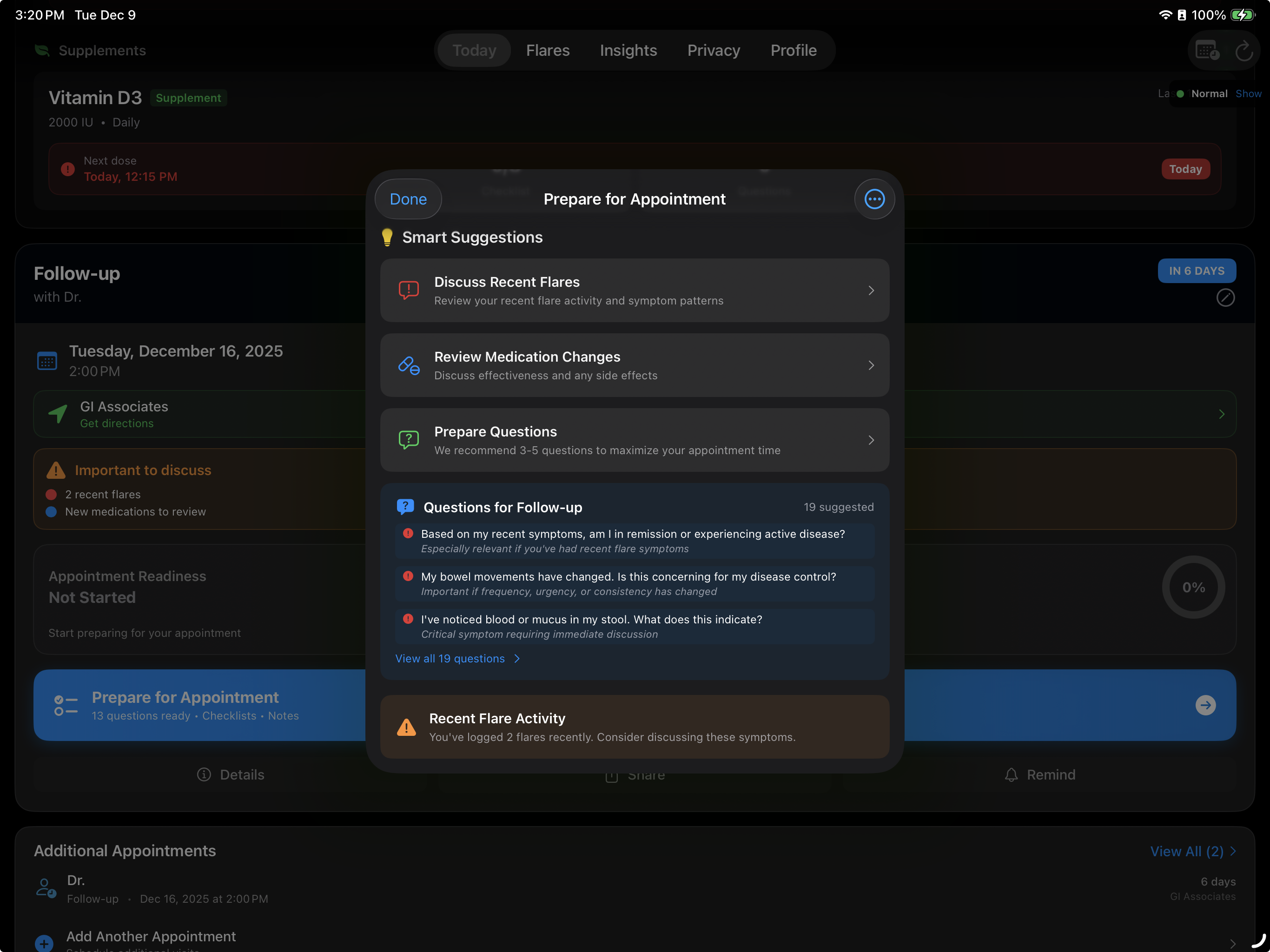
Report Generation
One tap generates a comprehensive PDF with vitals, symptoms, flare history, and clinical scores, ready to share with your office
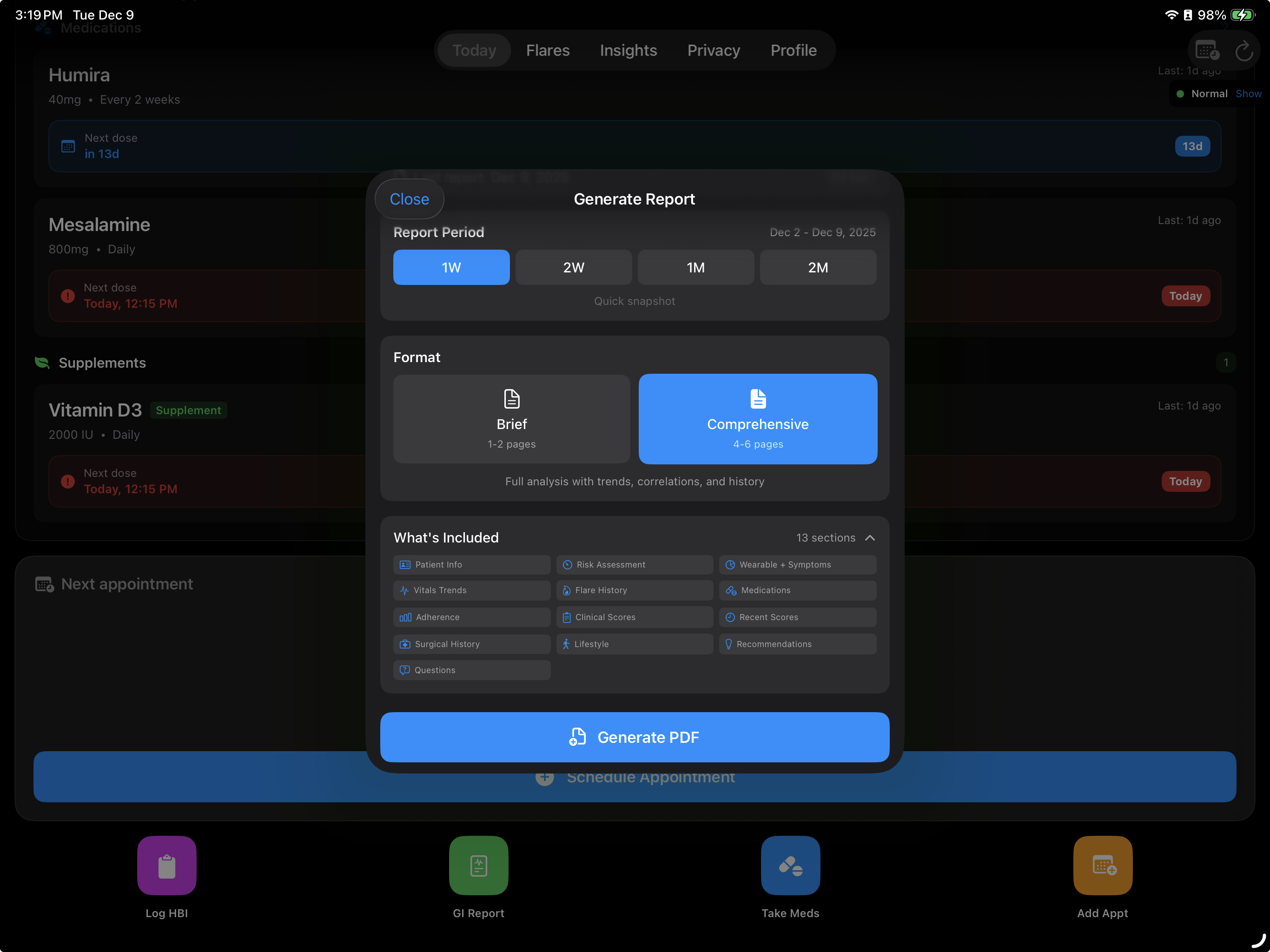
Visit Preparation
The app suggests discussion topics based on recent data, so patients arrive with relevant questions instead of trying to remember what happened
Start with One Patient
Recommend Flarity to a single engaged IBD patient. See what you receive. Then decide if it's worth mentioning to others.